ALL PCR Panel Kit

ALL PCR Panel Kit

The TRUPCR® ALL PCR panel is intended for the qualitative detection of diagnostic and prognostic markers of acute lymphoblastic leukaemia (ALL) in peripheral blood samples using Real-time PCR. The TRUPCR® ALL PCR Panel Kit is a comprehensive kit which includes complete cDNA chemistry for RNA-based transcripts.

Key Features

  • CE-IVD
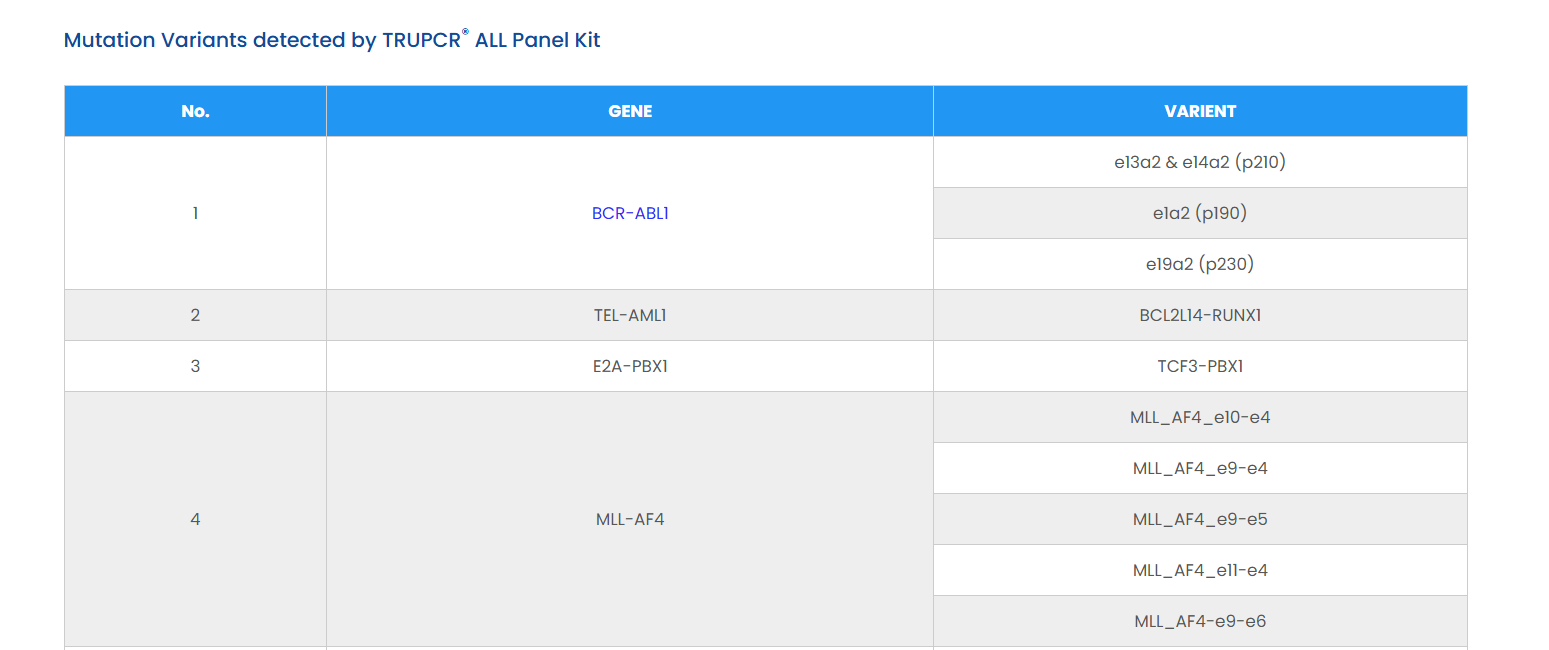
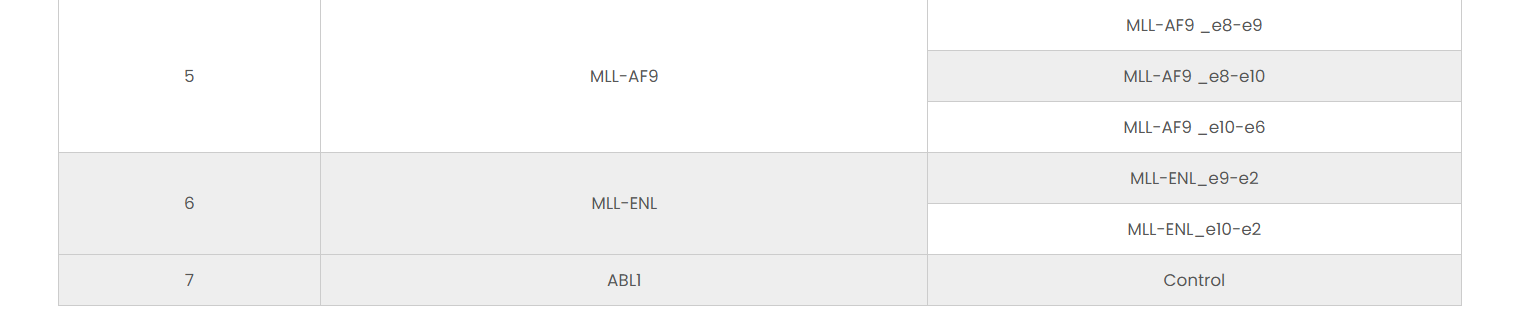
  • TRUPCR® ALL PCR Panel allows comprehensive detection of the most common diagnostic and prognostic markers for ALL.
  • It detects the most common variants of transcripts in the fusion genes.
  • The kit offers sensitivity to detect up to 10 copies of fusion transcripts.
  • All the reagents for cDNA chemistry, PCR and Real-time PCR are included in the kit.
  • It is compatible with various Real-time & Conventional PCR instruments.
  • Easy-to-use, rapid, reliable, comprehensive and cost-effective tests.

Acute lymphoblastic leukaemia (ALL) is mainly a disease of childhood that arises from recurrent genetic alterations that block precursor B- and T-cell differentiation and drive aberrant cell proliferation and survival. Due to the advances in the cytogenetic and molecular characterization of the acute leukaemias in the past two decades, genetic alterations can now be identified in more than 80% of cases of ALL. These genetic lesions influence the prognosis and therapeutic approach used for treatment of ALLs. Chromosomal translocation is the hallmark of leukaemias and acute lymphoblastic leukaemia (ALL) in particular. DNA damage arises from endogenous and exogenous genotoxic factors and lack of complete fidelity in DNA-repair leads to chromosomal translocations. Chromosomal breakpoints tend to occur at transcriptionally active DNA sites and the fusion gene transcripts generally involve genes which frequently encode cell cycle regulators, transcription factors, signal transduction molecules, receptors or immunoglobulin and TCR molecules. Due to the chromosomal translocations and subsequent expression of fusion gene transcripts, the normal functions of the genes are altered.