ADDRESSES
Head office
3 Kodesho Street, Off Mobolaji Bank Anthony Way, Ikeja, Lagos, Nigeria
REGIONAL OFFICE
2nd floor, Dbm plaza,
Plot 1381-1383, Aminu Kano, crescent, Wuse II, Abuja.
Nigeria
Work Hours
Monday to Friday: 8AM - 5PM

The history of the use of lasers in medicine begins with surgical lasers, then called laser knives.
The first to build a laser was the American scientist Theodore Maiman. This coherent and monochromatic beam of laser light shone in 1960 and began a promising era, giving rise to all modern solid-state lasers.
October 1961: Elias Snitzer of American Optical Co. reports the first neodymium laser surgery.
December 1961: The first medical procedure using a laser is performed by Dr. Charles Campbell of the Institute of Ophthalmology at Columbia-Presbyterian Medical Center and Charles Koester of American Optical Co. at Columbia-Presbyterian Hospital in Manhattan. The American optical ruby laser is used to destroy a retinal tumor.
October 1962: Nick Holonyak, a consultant at General Electric Co.’s Syracuse laboratory, publishes his paper on the GaAsP “visible red” laser diode, a compact, efficient source of visible coherent light.
In 1963: the first Polish HE-NE laser was launched – developed at the Military University of Technology – generating radiation with a wavelength of 1.15 µm.
In 1964, the first diode-pumped semiconductor laser was built.
Since 1972, the beginning of the widespread use of lasers in world medicine begins. The main reason for searching for new applications of lasers in medicine was the appearance of optical fibers. They allowed the introduction of a laser beam into body cavities and cavernous organs.
The first time in history lasers were presented in proctology was in 1989. It was the surgical removal of hemorrhoids. Then in 1990 Masson described the cases of patients who underwent hemorrhoidectomy with CO2 laser in outpatient conditions with good results.
Applications | SMART M SG-1 980nm, 1470nm (15W) | SMART M SG-2 980nm (15W) | SMART M SG-3 1470nm (15W) | SMART M SG-4 1940nm (7W) | SMART M SG-5 405nm,635nm (0.5W) |
Vascular surgery | ✓ | ✓ | ✓ | ✓ | |
Proctology | ✓ | ✓ | ✓ | ||
Microsurgery | ✓ | ✓ | |||
Wound treatment | ✓ | ||||
Infection diagnostics | ✓ |
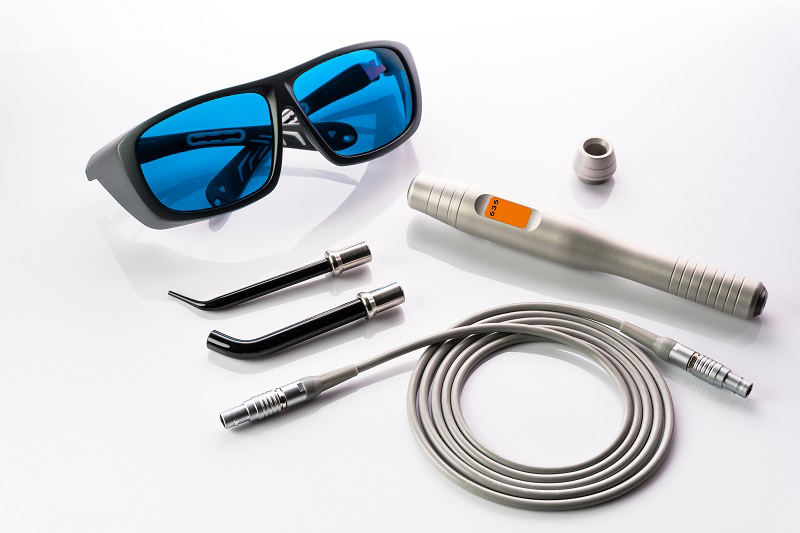
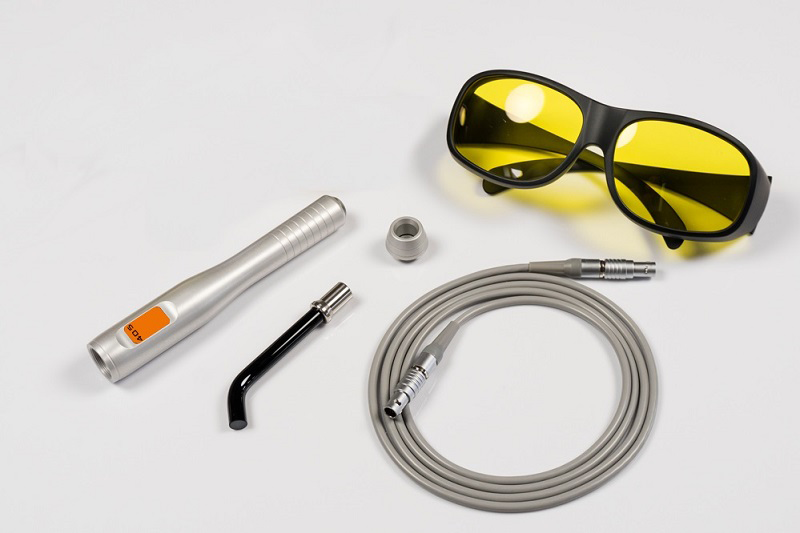
Each laser can be expanded with a 635 nm handpiece ideal for biostimulation and wound healing, as well as a 405 nm handpiece designed specifically for diagnosing infected areas and detecting bacteria.
Wavelengths | 405nm | 635nm | 980nm | 1470nm | 1940 nm |
Hemorrhoids | ✓ ✓ ✓ | ✓ ✓ ✓ ✓ | |||
Fistula | ✓ | ✓ ✓ ✓ ✓ | |||
Surgery | ✓ ✓ ✓ ✓ | ✓ ✓ | |||
Varicose veins | ✓ ✓ | ✓ ✓ ✓ | ✓ ✓ ✓ ✓ | ||
Dishes | ✓ ✓ ✓ ✓ | ||||
Microsurgery | ✓ ✓ ✓ ✓ | ✓ | |||
Wound treatment | ✓ ✓ ✓ ✓ | ||||
Infection diagnostics | ✓ ✓ ✓ ✓ |
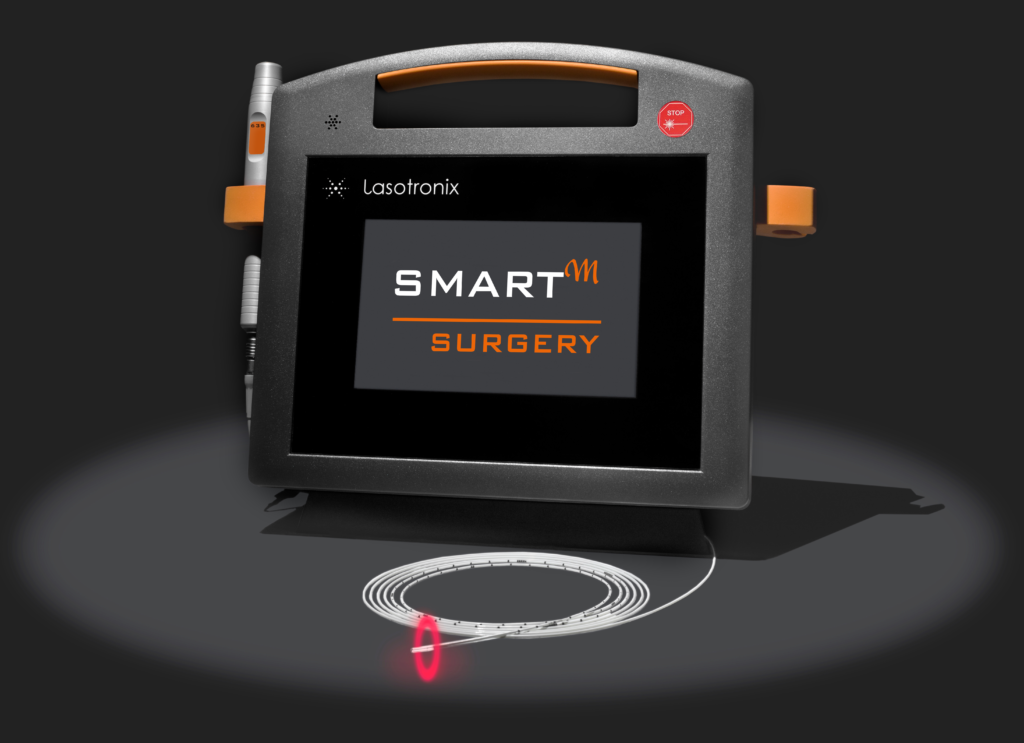
A novelty among medical devices manufactured by Lasotronix is the two-wave, universal surgical laser SMART M 980/1470nm, which, in addition to phlebology and proctology, is widely used in dermatosurgery, laryngology and gynecology.
Additionally, SMART diode lasers can be extended with an additional wavelength – 635nm, which, thanks to biomodulation effects, has a very beneficial effect on morphological elements of human blood. Treatments with this wave significantly improve the process of soft tissue regeneration, rebuild blood vessels, reduce postoperative pain and swelling, stimulate blood and lymph flow and strengthen local immunity. The use of the 635nm laser is especially recommended for patients undergoing inflammation, difficult-to-heal wounds or ulcers, and after each procedure to accelerate healing, reduce pain and swelling.
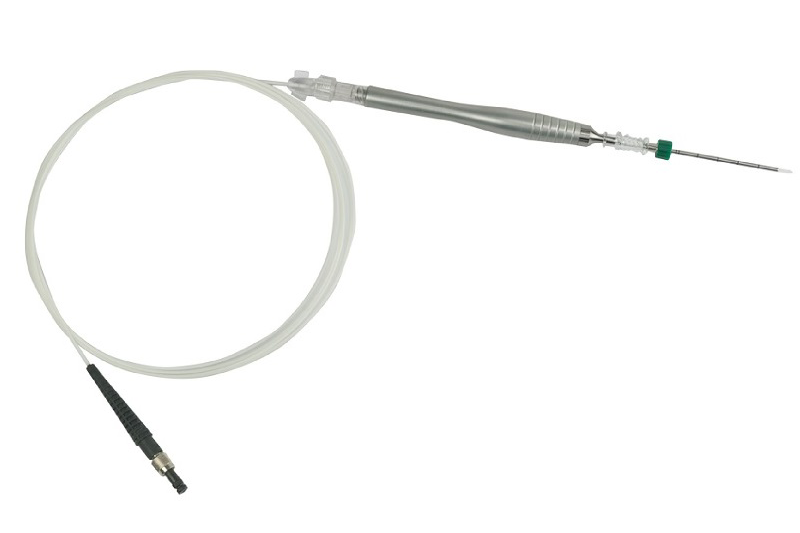
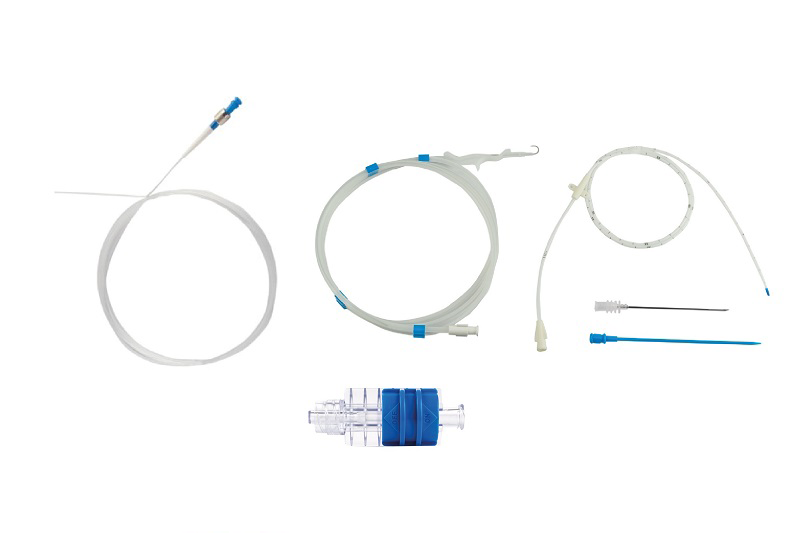
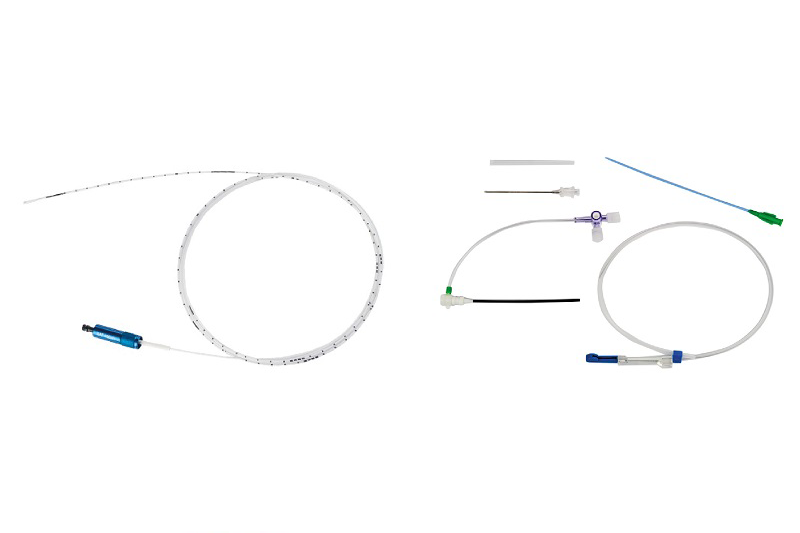
For minimally invasive intravenous laser ablation – EVLT, Lasotronix offers diode lasers emitting radiation at various wavelengths: 980nm, 1470nm or 1940nm with the possibility of further expansion with additional light sources.
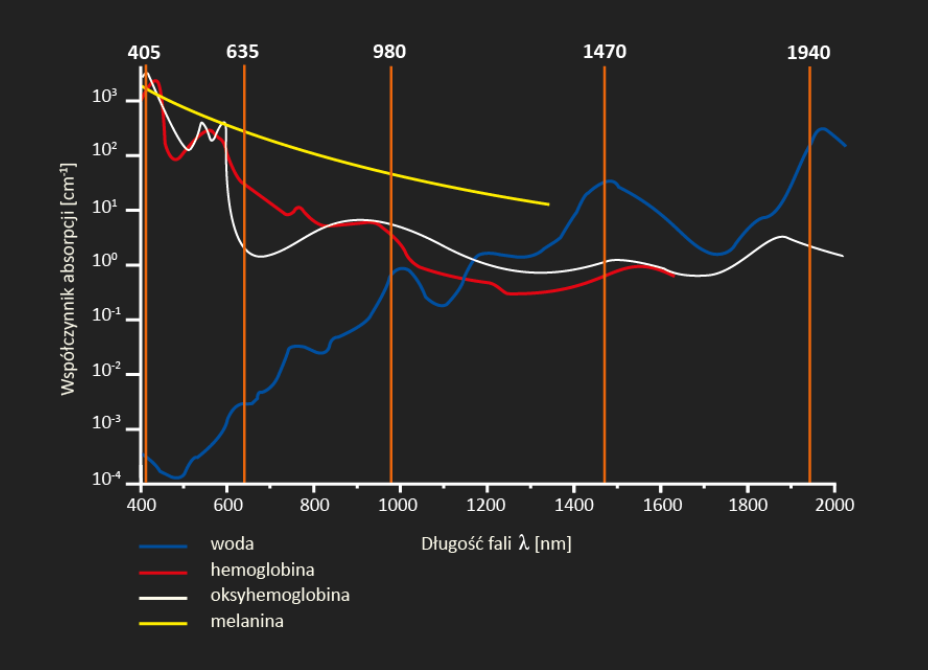
As can be seen in the graph, for 980nm radiation, the absorption coefficient is higher for hemoglobin than for water. In the case of 1470nm, especially 1940nm, it is the opposite, and water absorbs light radiation many times better than hemoglobin. Both of these chromatophores are components of human tissues, including blood and vessel walls. Lasers with a wavelength of 980nm have been used on a large scale for over 20 years, and the average power used during procedures is 10-12W. At a wavelength of 1470nm, lower powers are needed – at 6-8W, and for 1940nm waves, 4-6W is enough to perform an effective operation. Reducing the amount of power needed makes these lasers much safer and predictable tools for the doctor, while providing patients with a faster and more comfortable recovery.